The building
The Alte Börse in Vienna
The story of Vienna's old Stock Exchange on the Ringstraße: Theophil Hansen, the 1877 opening, the great hall, the 1956 fire and the concert rooms.
Take a seat at the Börse ↗Quick answer
The Alte Börse is the former Vienna Stock Exchange at Schottenring 16. Theophil Hansen and Carl Tietz built it between 1874 and 1877 in neo-Renaissance style, and Emperor Franz Joseph opened it on 14 March 1877. A fire on 13 April 1956 burned out the great hall, which was not rebuilt. The exchange moved out in 1998, and the halls are now hired for events.
A site on the old defences
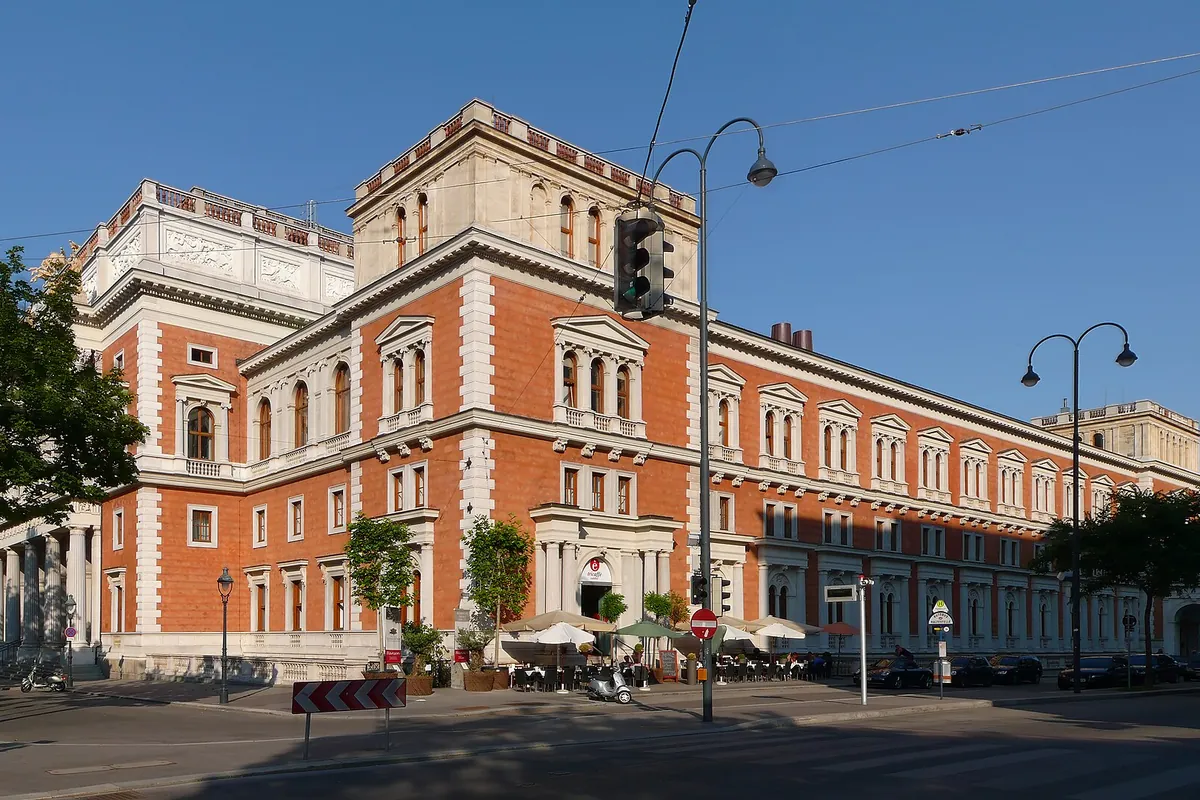
The Börse stands where Vienna's fortifications once ran. Emperor Franz Joseph ordered the walls demolished in 1857, and the boulevard that replaced them became the Ringstraße. Vienna's history wiki records that the building stands partly on the ground of the old Elendbastei and partly on the glacis in front of it. The bastion was finished in 1561 and stood almost exactly three hundred years. The work of clearing the defences was largely done by 1864, and building began ten years later.
A temporary exchange
Vienna's exchange was founded in 1771 under Maria Theresa, and by the 1860s it had outgrown its rooms. The chamber decided to build its own house, and in 1869 it accepted Hansen's plan. While the new building went up, trading moved on 6 May 1872 into a timber building at Schottenring 19, which was built to last only until 1877. Photographs of that temporary exchange survive. It is a reminder that the grand palace was built while the business carried on next door.
Hansen and Tietz
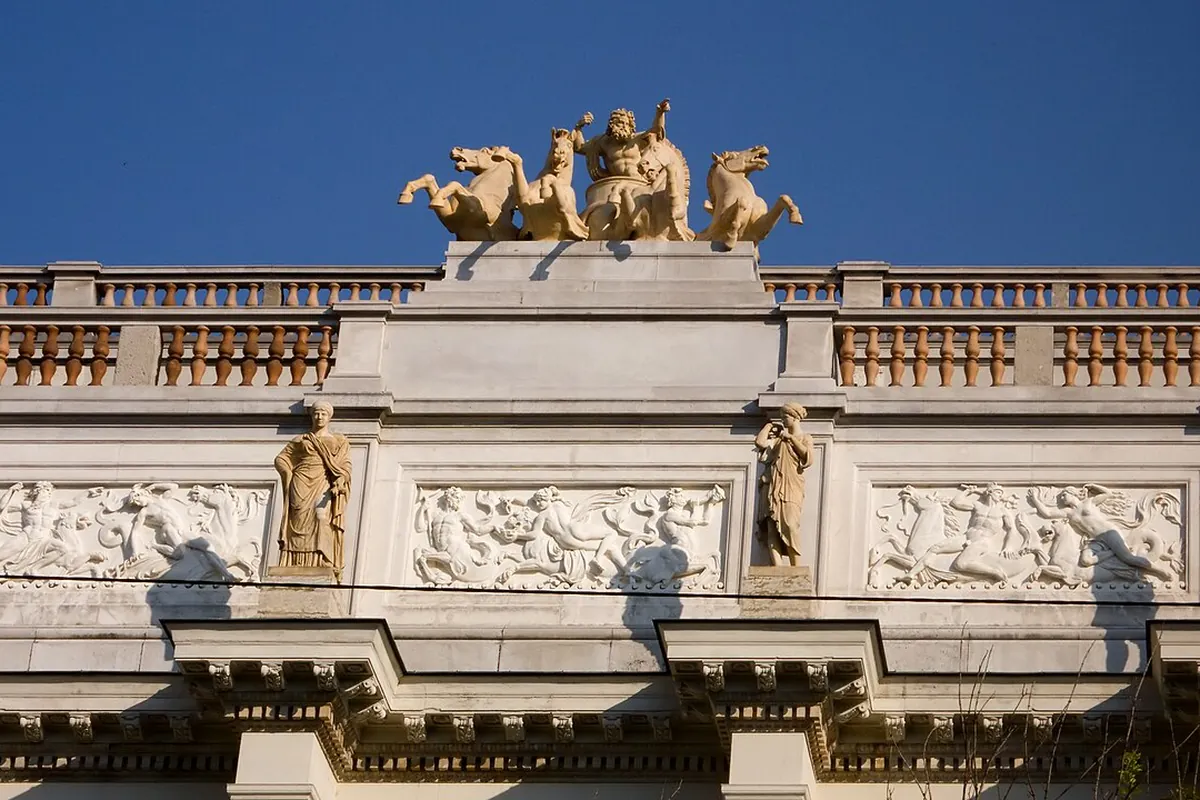
Theophil Hansen was a Danish architect who became an Austrian citizen and one of the Ringstraße's most important builders. Vienna's history wiki credits the Börse to Hansen and Carl Tietz, and gives the years 1874 to 1877. Hansen was working on the Parliament at the same time, so two of the Ring's largest buildings rose together. The style is neo-Renaissance, a form of the historicism that defines the Ringstraße, and the walls are red except for the stone cladding.
The opening and the great hall
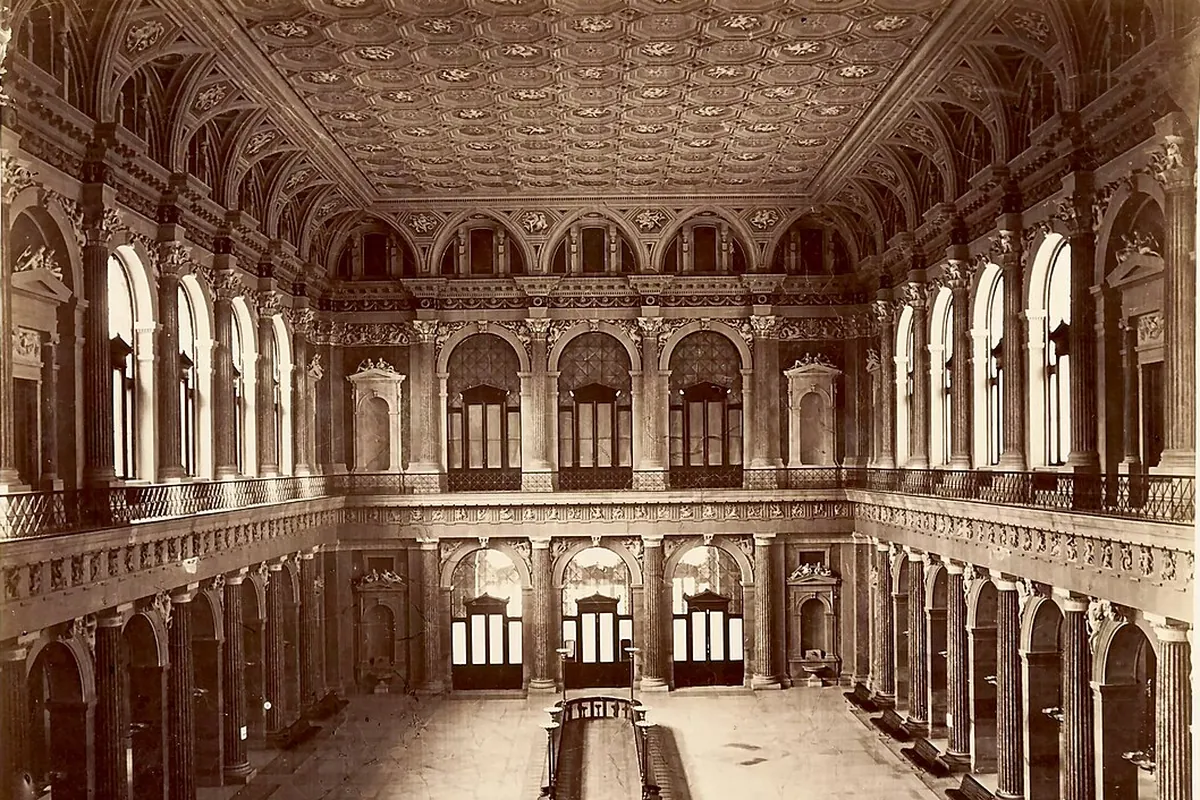
Emperor Franz Joseph opened the finished building on 14 March 1877, and the first exchange meeting followed on 19 March. The centre of the building was the trading hall, which was counted among the most splendid exchange halls of its time: Doric columns below, Corinthian above, high round arches and a richly coffered ceiling. The sculptor Vincenz Pilz made the Neptune in a triumphal arch, and Alois Düll made Zeus and Neptune. A photograph from about 1880 shows the hall as it was.
More than a stock exchange
The building was never only a market. The first floor housed a casino and the chamber of commerce, and before 1880 an Oriental museum settled there. The museum of Austrian folk life opened in the building on 31 January 1897. After the Second World War, a bomb hit the north-east corner on 12 March 1945, and the great hall was partitioned and used as an exhibition hall. The building has changed use often, which helps explain why it can host a concert now.
The fire of 1956
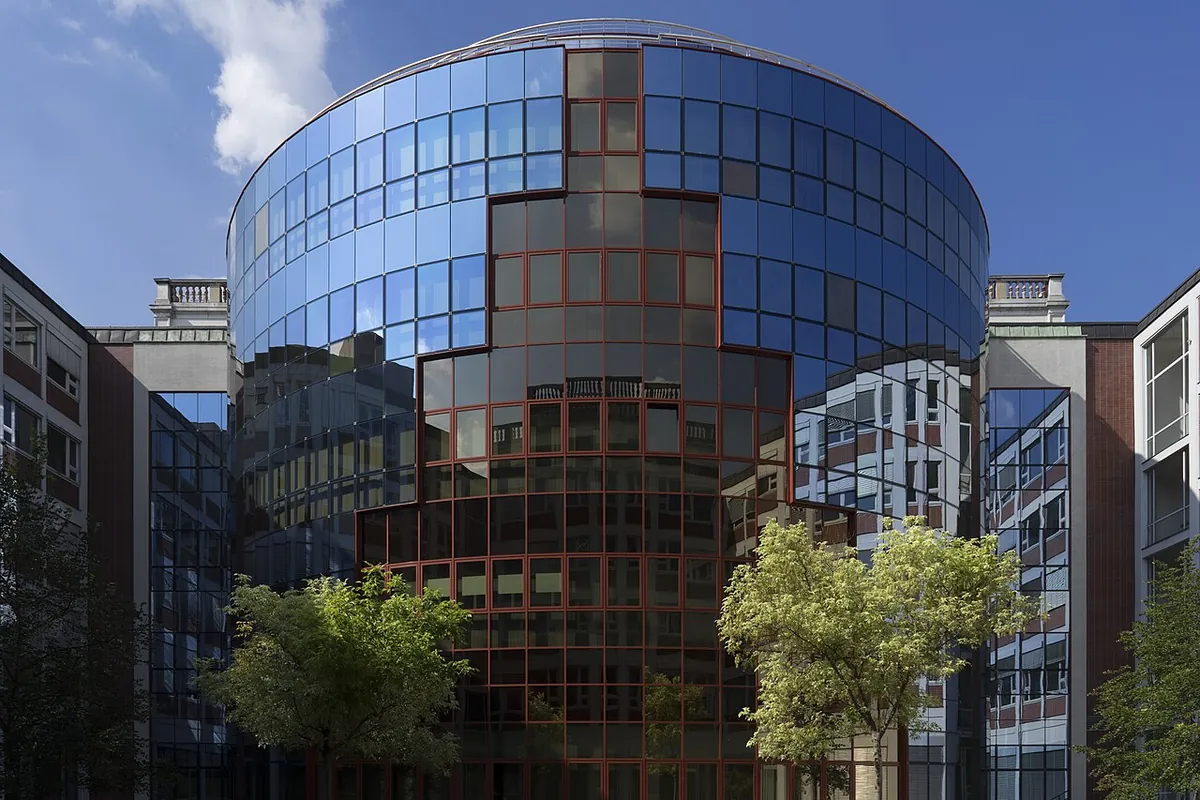
On 13 April 1956 a great fire burned out the central hall and the inside of the entrance block. A competition followed, and the architects Erich Boltenstern and Erich Schlöss won it. The brief asked for office space instead of the big hall, which had been too large for the exchange since the end of the monarchy. They took down the surviving hall walls and built an inner courtyard with four new wings. Trading resumed on 7 December 1959. The hall Hansen built does not exist today, so the concert room is a different space.
From exchange to venue
The Wiener Börse left the building in 1998 after its privatisation and has been in Palais Caprara-Geymüller on Wallnerstraße since 2001 to 2002. The Schottenring building became known as the Alte Börse, and its halls are hired for events. The owner is a foundation left by the entrepreneur Karl Wlaschek in 2015. The organiser of the concert lists the Börse among its concert rooms and names its Festsaal, the main hall. The building is a short, instructive visit even without the music.
Frequently asked questions
Who designed the old Börse?
Theophil Hansen and Carl Tietz, who built it between 1874 and 1877 in neo-Renaissance style.
When did it open?
Emperor Franz Joseph opened it on 14 March 1877.
Is the original trading hall still there?
No. A fire on 13 April 1956 burned it out, and the rebuild replaced it with an inner courtyard.
Does the stock exchange still use it?
No. The Wiener Börse left in 1998 and works from Palais Caprara-Geymüller.
Sources